
Oxytocin is a nine–amino-acid (nonapeptide) research material used to study GPCR signalling via the oxytocin receptor (OXTR), including Gq/PLC/IP3/Ca2+ pathways, receptor selectivity, and peptide–receptor structure–activity relationships in controlled in-vitro systems.
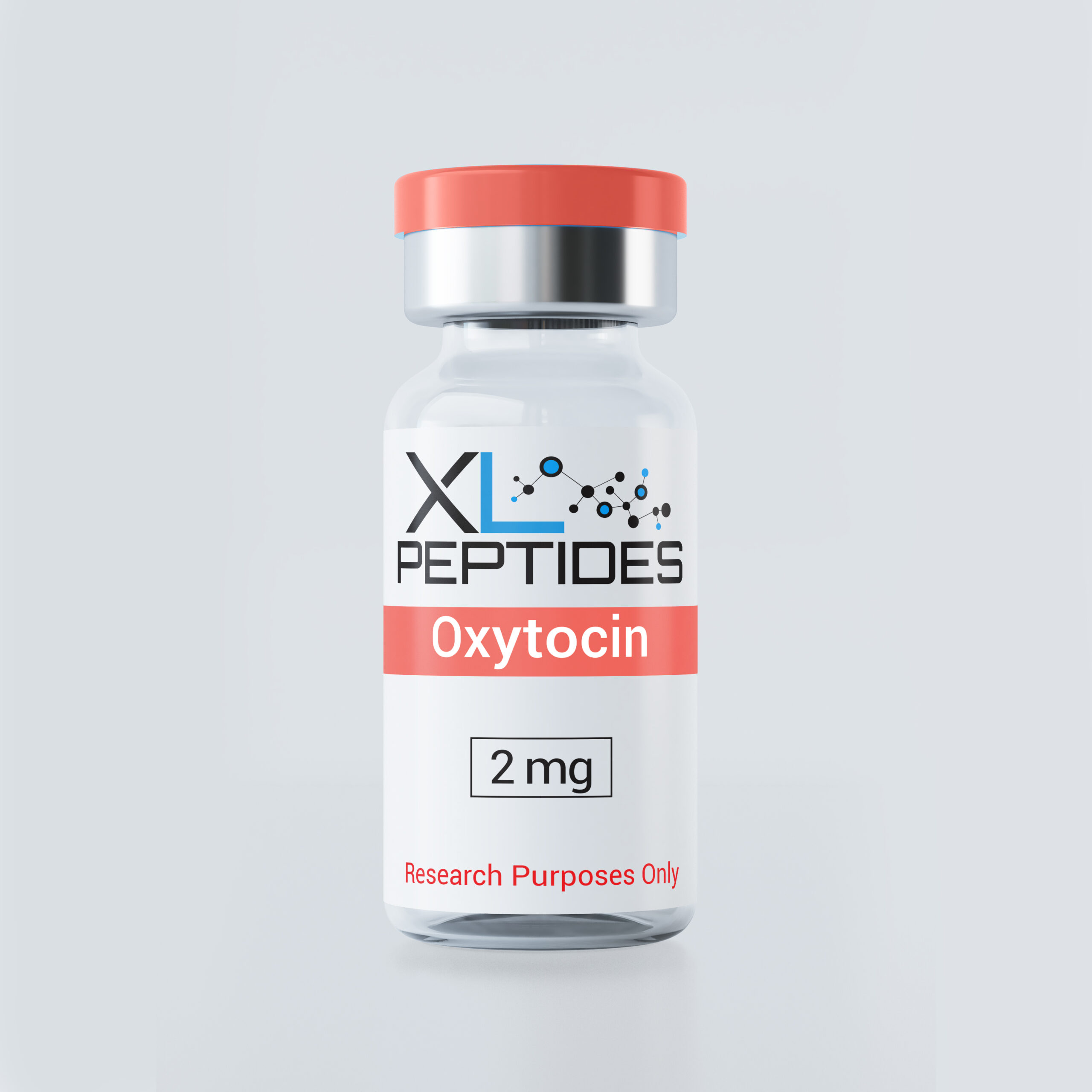
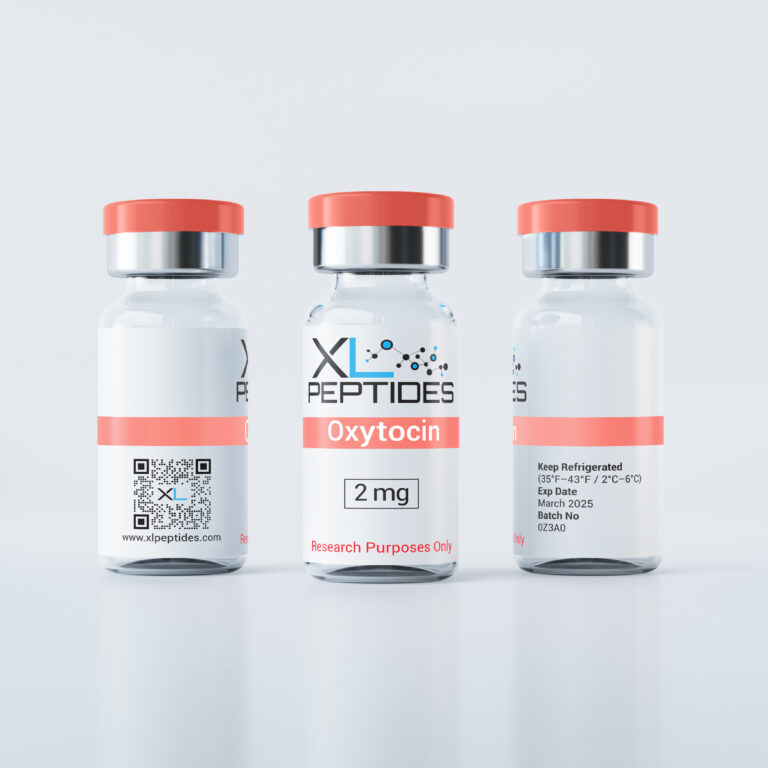
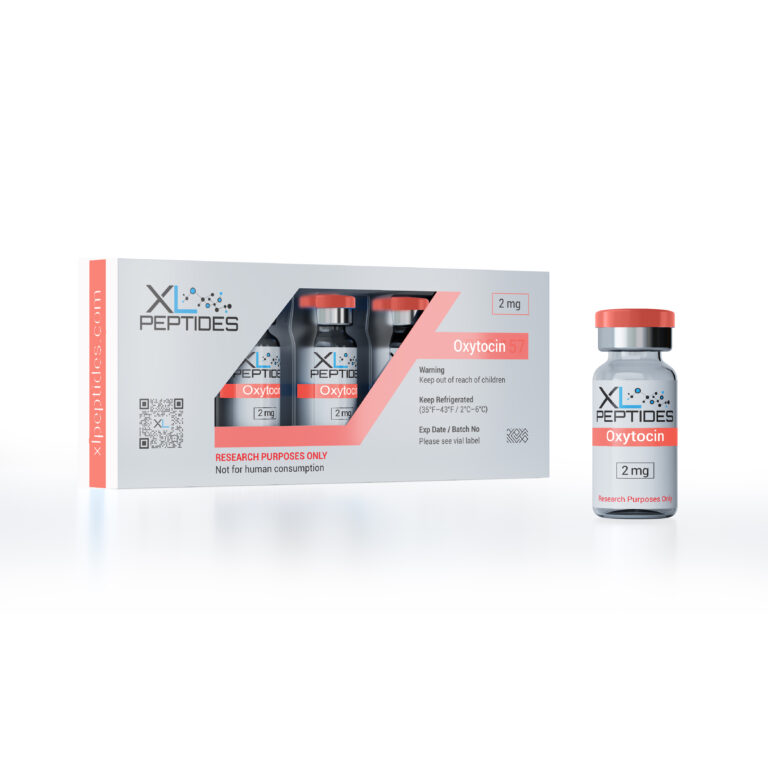
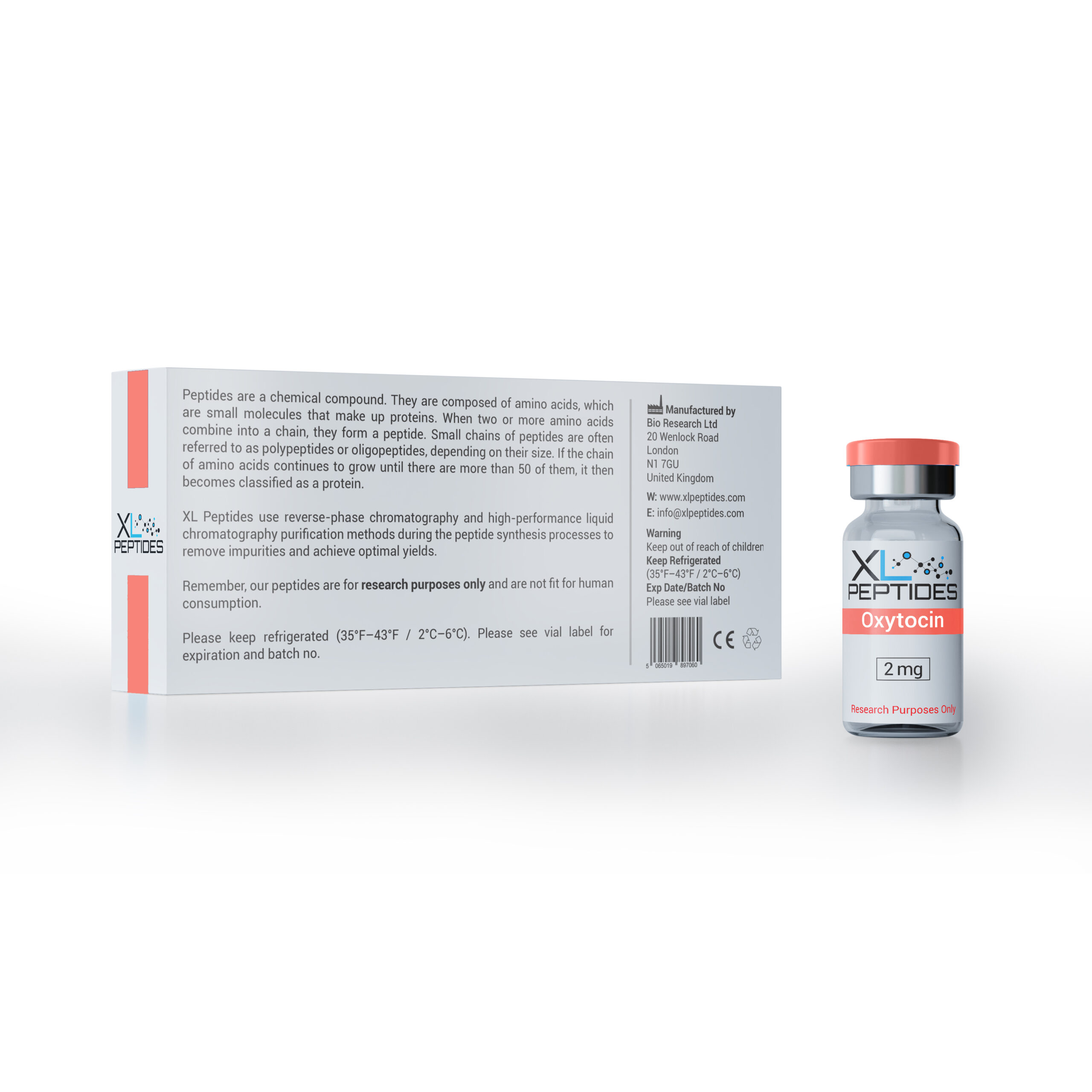
Oxytocin — 2 mg
This cyclic nonapeptide contains a disulfide bridge between Cys1 and Cys6, with an amidated C-terminus. Consequently, it is widely employed to explore peptide receptor pharmacology, second-messenger responses, and cross-talk with vasopressin receptor families under non-clinical laboratory conditions.
For laboratory research only. Not for human use.
Oxytocin Key features
- Nonapeptide for in-vitro OXTR signalling and peptide pharmacology studies.
- Disulfide-bridged cyclic peptide; C-terminal amide.
- Supplied as a lyophilised solid for stability and straightforward storage.
- Unit size: 2 mg per vial.
- Each batch released only after stringent quality checks.
Specifications
- Product name: Oxytocin
- Synonyms: OXT; α-hypophamine (historic); OT
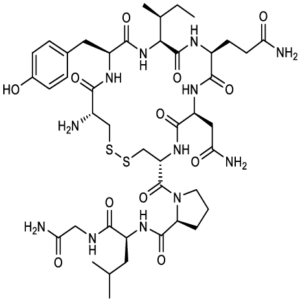
- Sequence (one-letter): Cys–Tyr–Ile–Gln–Asn–Cys–Pro–Leu–Gly-NH2 (CYIQNCPLG-NH2)
- Bridge: Intra-chain disulfide Cys(1)–Cys(6)
- Molecular formula (free base): C43H66N12O12S2
- Molecular weight (free base): ~1007.2 g/mol
- CAS (reference): 50-56-6
- Form: Lyophilised powder
- Appearance: White to off-white solid
Handling & storage
- Storage (dry): Keep vials at 2–8 °C, protected from light and moisture.
- Reconstitution: Bring vial and diluent to room temperature. Reconstitute with
Bacteriostatic Water 10 ml. Swirl gently—do not vortex. - After reconstitution: Store at 2–8 °C, protect from light, use aliquots to reduce handling, and avoid repeated temperature cycling.
- Compatibility: Use only within research protocols that follow your lab’s SOPs and local regulations.
Looking for complementary materials? See
Bacteriostatic Water 10 ml and neuropeptide research companions such as
PT-141 (Bremelanotide) 10 mg and
Melanotan II (MT-2) 10 mg.
About oxytocin in research
Researchers use oxytocin to probe OXTR signalling cascades (e.g., Gq/PLC/IP3/Ca2+), receptor desensitisation and internalisation, and selectivity relative to vasopressin receptors in cell-based assays. These investigations focus on receptor pharmacology and downstream second-messenger dynamics exclusively in controlled, non-clinical in-vitro environments.
Synthesis & quality
Manufactured via controlled, validated peptide-synthesis processes to deliver high purity and lot-to-lot consistency. Each batch undergoes identity, purity, and appearance checks before release.




Reviews
There are no reviews yet.